In this issue
Archives
Side Articles
CFBAA Fall Newsletter
President's Report
CFBAA Presidents Corner
You’all be careful out there! Hill Street Blues was one of my favorite shoes back in the 80’. Mainly because it was based on the hill district in Pittsburgh, was well written and acted, and captured the grittiness of my hometown. The shift sergeant shared those words to his officers each morning after his brief. We need to resurrect that sentiment in aviation these days, given all the accidents and incidents happening. How are planes continuing to have runway excursions given all the resources that are available, all the training that takes place, and the technology that exists in cockpits? According to the NTSB, and FAA, pilot error accounts up to 80% of aviation accidents, particularly in general aviation.
Inattention to Standard Operating Procedures remains one of the top reasons, and I proffer that the experience level of the pilot force could be a contributor. Professional pilots often think that we would never do what that crew did, and then climb in our plane without SOP’s, without proper preflight planning, ignorant about our aircraft’s performance, and purposely not challenged at our training events.
The times they are changing! With the cooperation of several aviation safety organizations, the NBAA, all major training companies, and operators a Standardized SOP has been created. It will be instituted, over the next year, for every training event with our major providers and is accessible on the NBAA web site to everyone. (Google NBAA SOP)
Another great tool is the upcoming CFBAA Safety Standdown on September 30th, from 7:30 am to 4:30 pm, at CAE on Nemours drive in south Orlando. Register at CFBBA.org and take a step to not being on the evening news for making wrong decisions. In other words:” Let’s be careful out there!”
Dave
From the Executive Directors desk
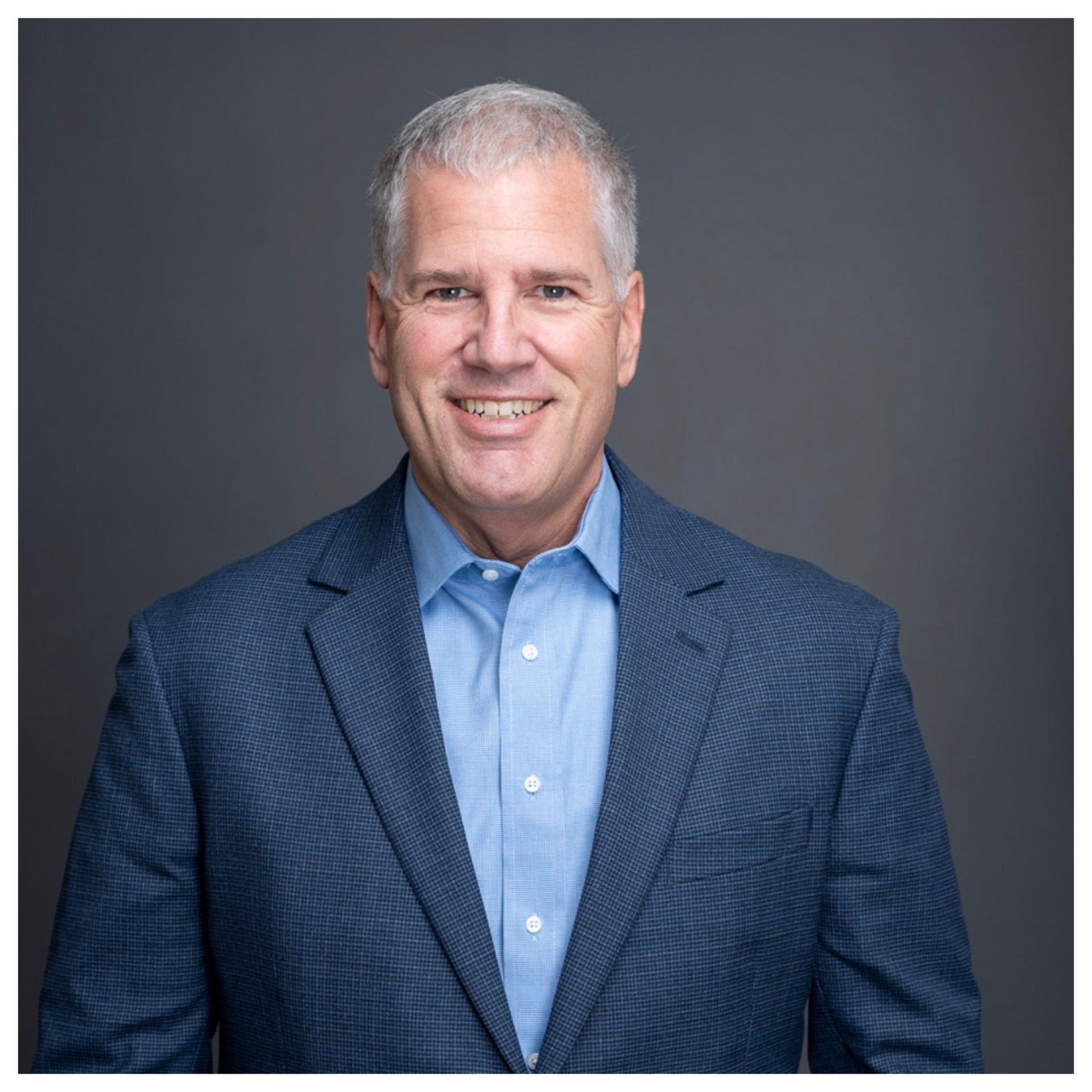
It is hard to believe that I am only a few months away from stepping down as Executive Director of the Central Florida Business Aviation Association. For the past seven years, CFBAA has been much more than an association to me, it has felt like family.
I have had the privilege of watching this organization grow from a handful of members with an idea into a thriving association of more than 600 members. Along the way, my professional network has expanded tremendously, but even more importantly, so has my circle of friends.
When we started CFBAA seven years ago, I wanted to help change the landscape of regional business aviation associations. As a younger pilot trying to build my network and get my foot in the door, I joined several industry groups only to find very little communication and few opportunities to get involved. In some cases, the only events were a holiday party and a golf outing. Since I didn’t golf, that left me paying annual dues for essentially one event a year. I knew we could do better.
From the beginning, I wanted CFBAA membership to remain affordable so that people at every stage of their careers could participate. I wanted us to offer events that were educational, engaging, and, most importantly, provided opportunities for people to build meaningful relationships and expand their networks. I wanted every member to feel that their dues were being spent wisely and that they were receiving a real return on their investment.
Our dream became a reality with the early support of NBAA and Bombardier. Their belief in our vision and financial support helped us get off the ground and establish the association. We were also incredibly fortunate to have a dedicated Board of Directors and a small group of hardworking volunteers who handled the countless behind-the-scenes details necessary to turn an idea into a legitimate organization.
From there, we simply took it one event at a time, and we grew.
When COVID arrived, we adapted. Instead of shutting down, we found ways to keep our community connected through virtual happy hours and online educational sessions. When the world opened back up, we hit the ground running. We launched Business Aviation Day for students, hosted lunch-and-learns, BBQs and OEM aircraft walk-throughs, expanded our scholarship efforts, and began hosting happy hours in four different cities across Central Florida. Over time, our calendar grew, our membership grew, and our impact grew.
Looking back today, I am incredibly proud of what CFBAA has become.
I realize I have used the word “I” quite a bit, but the truth is that none of this could have been accomplished by one person. I may have had a vision, but it took an amazing group of volunteers to bring that vision to life. It also took a long list of sponsors who believed in what we were building and provided the financial support that allowed us to offer these events and opportunities to our members.
Some of those sponsors may be happy that they won’t see my name popping up on their phones quite as often! But please know how genuinely grateful I am for every sponsorship, every renewal, every event you supported, and every time you said “yes” when CFBAA came calling. Your support helped build this association.
As I prepare to move into my next chapter in business aviation, I do so knowing that CFBAA will be in very good hands with Hakar Torres. Hakar has great ideas, tremendous energy, and his own vision for where this association can go next. Just as importantly, he represents the next generation of leadership that CFBAA was created to support.
Seven years ago, we wanted to create an association where the next generation could build relationships, find opportunities, develop as professionals, and eventually become leaders themselves. In many ways, handing the reins to Hakar feels like that vision coming full circle.
It is time for me to step aside and let that next generation lead.
I will truly miss serving as Executive Director, but I am also incredibly excited to watch CFBAA continue to evolve and grow. I will remain proud of what we built together and, more importantly, grateful for the friendships, experiences, and memories that came with it.
To every board member, volunteer, sponsor, member, partner, and friend who has supported me and CFBAA along the way, thank you!
It has been an incredible seven years, and I cannot wait to see what the next seven bring.
Incoming Executive Director
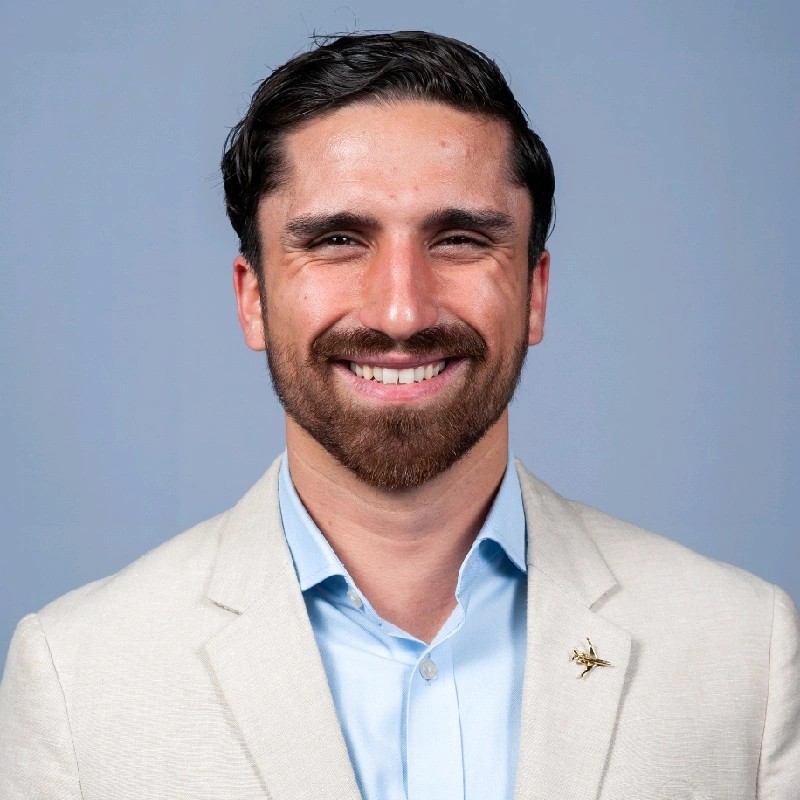
It is a distinct privilege to step into the role of Executive Director for the Central Florida Business Aviation Association. For those I have not yet had the opportunity to meet, I want to formally introduce myself, share my background, and outline my commitment to this organization.
My dedication to Central Florida’s aviation sector is lifelong. I was born and raised just here in Winter Park and my focus on this industry was established early in the aviation magnet program at Sanford Middle School. Over the years, I built a comprehensive career, serving in roles spanning commercial passenger operations at Orlando International Airport, global cargo logistics, and pilot training scheduling. Beyond the ramp and the simulator, I have actively partnered with local organizations to champion professional development and leadership education across our region.
I am not simply stepping in to lead this association; I am actively navigating the same operational landscape alongside you. In my concurrent role as Head of Sales – Americas for NERD.aero, I remain deeply entrenched in the daily realities, emerging technologies, and modern trends shaping business aviation today. I am excited to leverage this dual perspective, pairing my active frontline industry involvement at NERD.aero with my leadership at CFBAA, to champion our members, encourage innovation, and elevate the standard of our industry as a whole.
To our 600-plus members: your insight, volunteerism, and professionalism are the foundation of this organization. Thank you for the work you do.
As your Executive Director, my priority is to ensure CFBAA serves as a highly accessible, tangible asset to your operation. Whether you are seeking a strategic introduction, looking to source qualified talent, or wanting to host a workshop or lunch-and-learn at your facility to showcase your capabilities, the CFBAA is here to support you. My goal is to facilitate the collaboration and partnerships required to bridge the gap between the business challenges you face today and the solutions of tomorrow.
As we navigate this next season of growth and development together, I welcome your insights, opinions, and candid feedback on how we can continue to refine this association to best serve your needs.
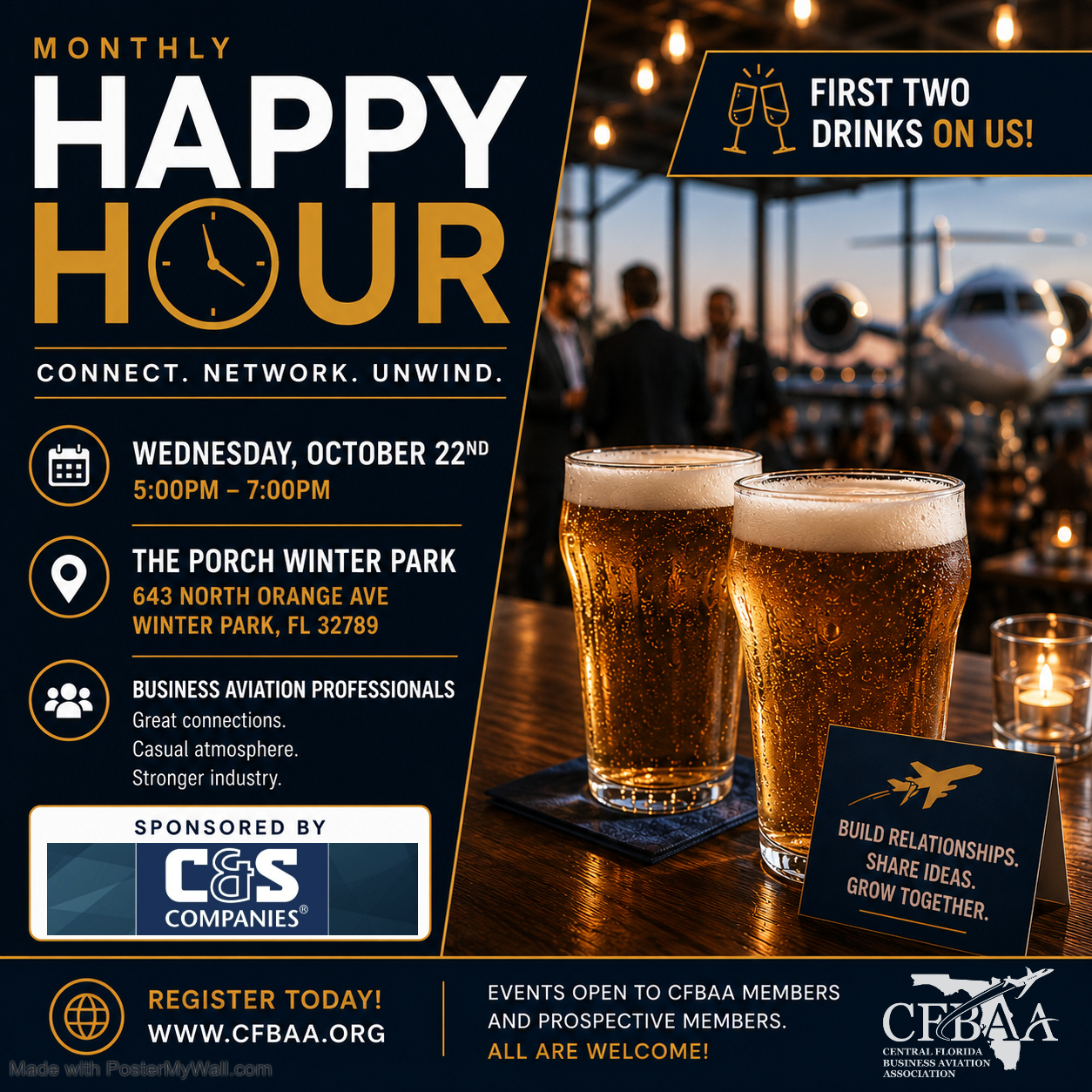
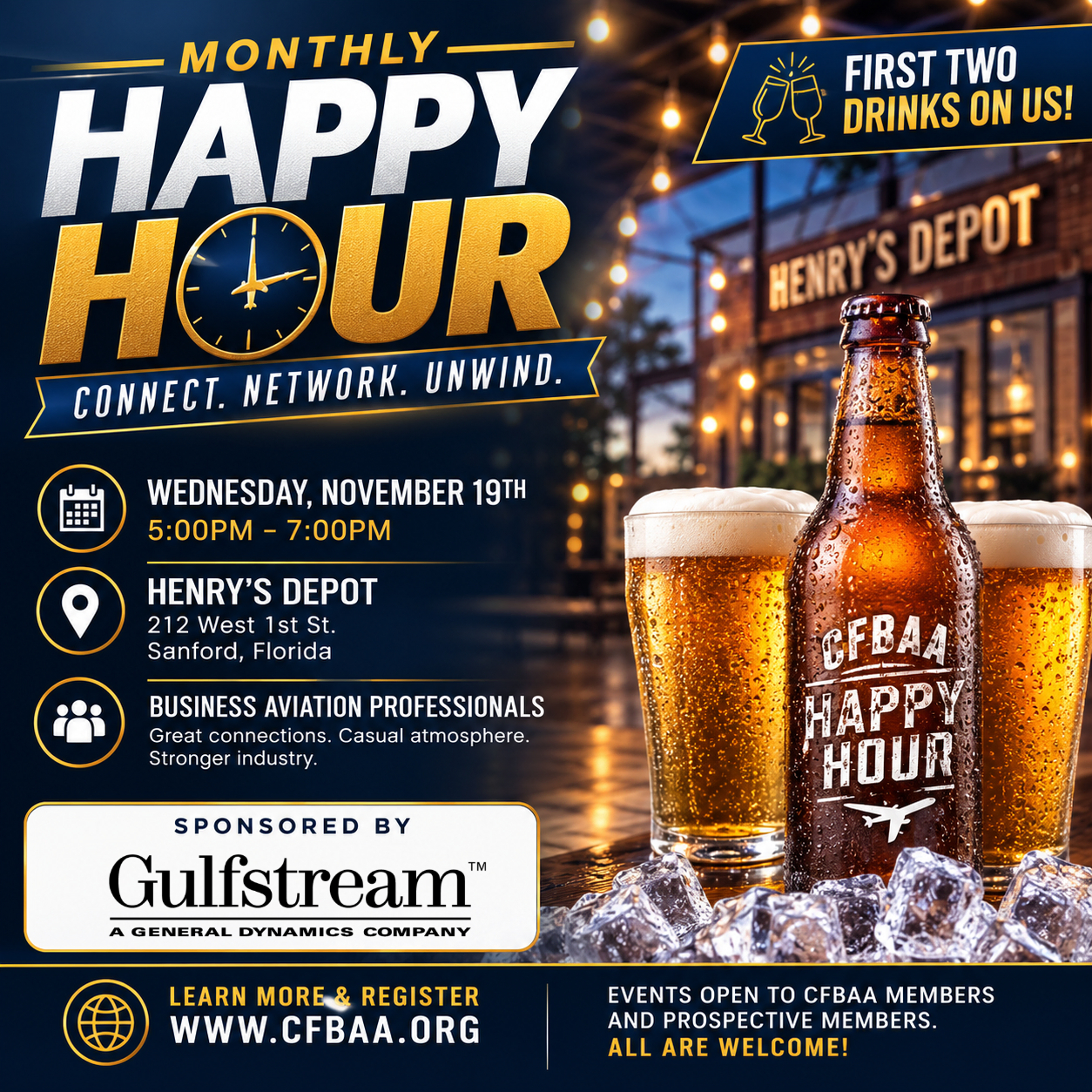
I look forward to finishing the year strong and connecting with many of you at NBAA-BACE in Las Vegas. Locally, please ensure your teams are registered for our upcoming calendar, including the Safety Standdown, the annual Golf Outing, and our monthly happy hours.
Excited to serve this community with enthusiasm and professionalism
Warm regards,
Hakar Torres Executive Director, CFBAA
Legislative Committee
Katie Inman : Legislative Committee Chair
Florida Updates
Florida’s 2027 legislative session will begin in March 2027. Prior to convening theregular session, the Florida Legislature Organizational Session, which is a mandatory single-day meeting held on the 14th day following each general election, will occur November 17, 2026. At the Organizational Session, newly elected and returning members will be sworn in, chamber officers (such as the Senate President and House Speaker) will be elected, and both Houses will adopt legislative rules and begin the committee appointment process. Committee weeks in preparation for the 2027 legislative session will also occur in November.
According to the Florida Aviation Business Association and the South Florida Business Aviation Association, with which CFBAA partners, the focus of the organizations’ lobbying efforts for the 2027 legislative session will be sales tax relief for the purchase of aircraft in Florida. At the upcoming CFBAA Legislative Committee meetings, we will discuss data we can offer in support of the lobbying effort for tax relief. Interested CFBAA members are welcome to join us at the Committee. Please contact Katie Inman if you have any questions about our upcoming meetings or our goals for lobbying.
As for the 2026 legislative session, CFBAA considers the session a success for general and business aviation, as both Houses passed and Governor DeSantis signed Senate Bill 422, which restricts airports from using ADS-B flight tracking data to bill certain operators. In particular, airports in Florida may no longer use ADS-B information to assess or collect fees from general aviation pilots operating aircraft weighing 12,499 pounds or less under 14 C.F.R. part 91. Senator Tom Wright, who represents Volusia County and northern parts of Brevard County, sponsored the legislation, which took effect July 1, 2026.
Federal Updates
On September 15, 2026, the House Appropriations Committee’s Subcommittee on Transportation, Housing, and Urban Development held a hearing titled, “Oversight Hearing – Federal Aviation Administration,” at which Federal Aviation Administrator Bryan Bedford testified. Discussion centered on the Federal Aviation Administration’s (FAA) $22.4 billion fiscal year 2027 budget request and the agency’s ongoing modernization of the national airspace system, funded in part by a $12.5 billion down payment provided through the One Big Beautiful Bill Act (H.R.1). Members broadly supported the modernization effort as a generational investment in aviation safety and economic competitiveness. However, on a bipartisan basis, members expressed concern over whether existing funding would be sufficient to complete the program.
On September 16, 2026, the Senate Commerce, Science, and Transportation Committee convened a markup to consider nine bills addressing a range of topics including aviation, fishing, sports, telecommunications, and technology. Among the nine bills were two measures focused specifically on improving aviation safety: the Air Traffic Situational Awareness Enhancement Act (S. 3929) and the Runway Surface Awareness and Focused, Effective Training and Technology (SAFE-T) Act (S. 5224).
On the subject of ADS-B, both Houses of Congress continue to consider requirements for ADS-B In. Separate legislation in the U.S. House and Senate (The ROTOR and Alert Acts) would institute a mandate for ADS-B In, but neither had cleared both chambers before Congress began a two-month adjournment the week of September 14, 2026. The ROTOR Act is a focused Senate bill that immediately requires cockpit traffic screens on aircraft, while the House ALERT Act is a wider reform that lets regulators study and decide on safety tools over time. Both bills were written after a deadly midair plane crash near Washington, D.C. in January 2025.
Safety Committee
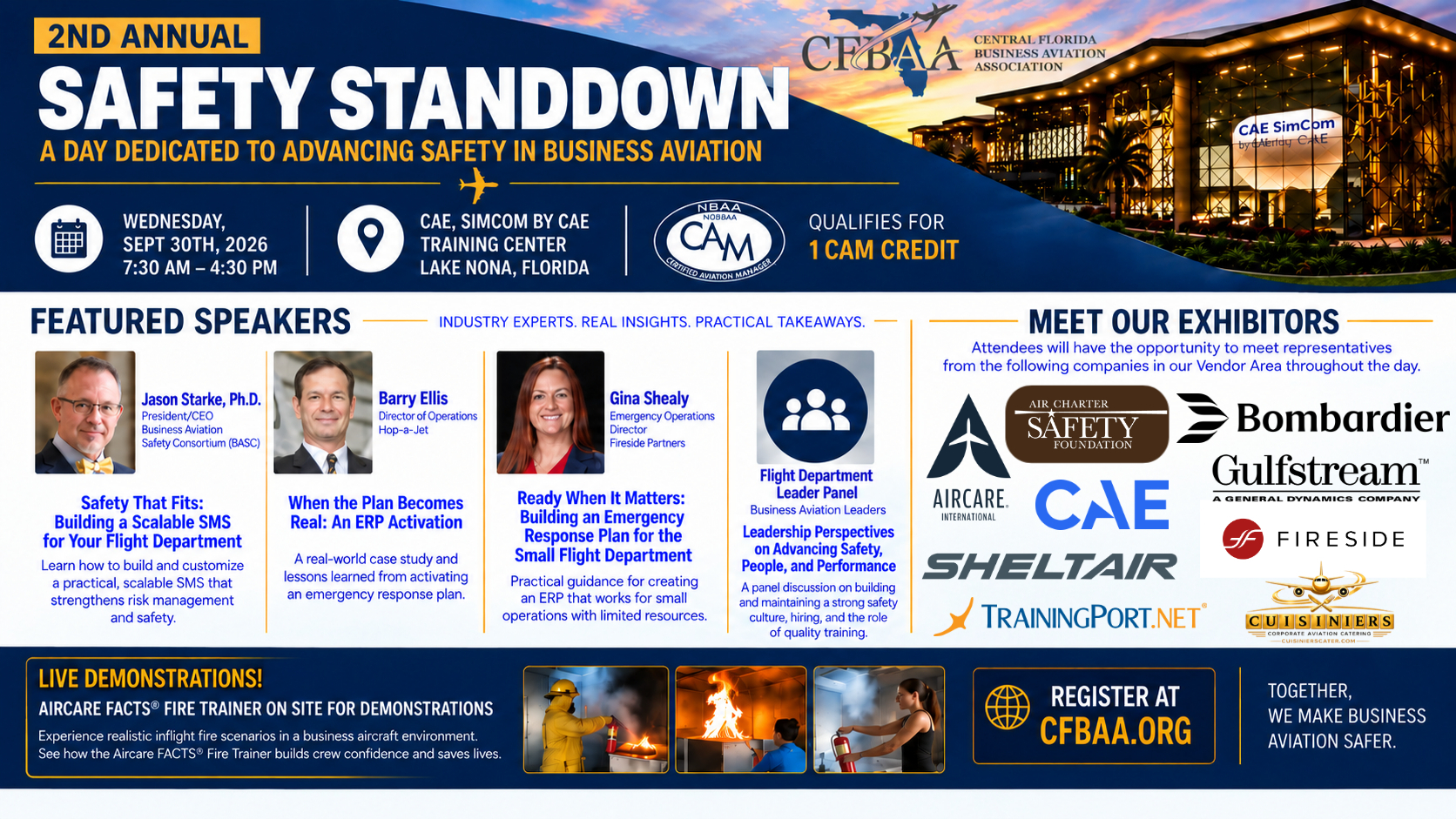
CFBAA 2nd Annual Safety Standdown
From Good to Great: Advancing Safety in Small Flight Departments
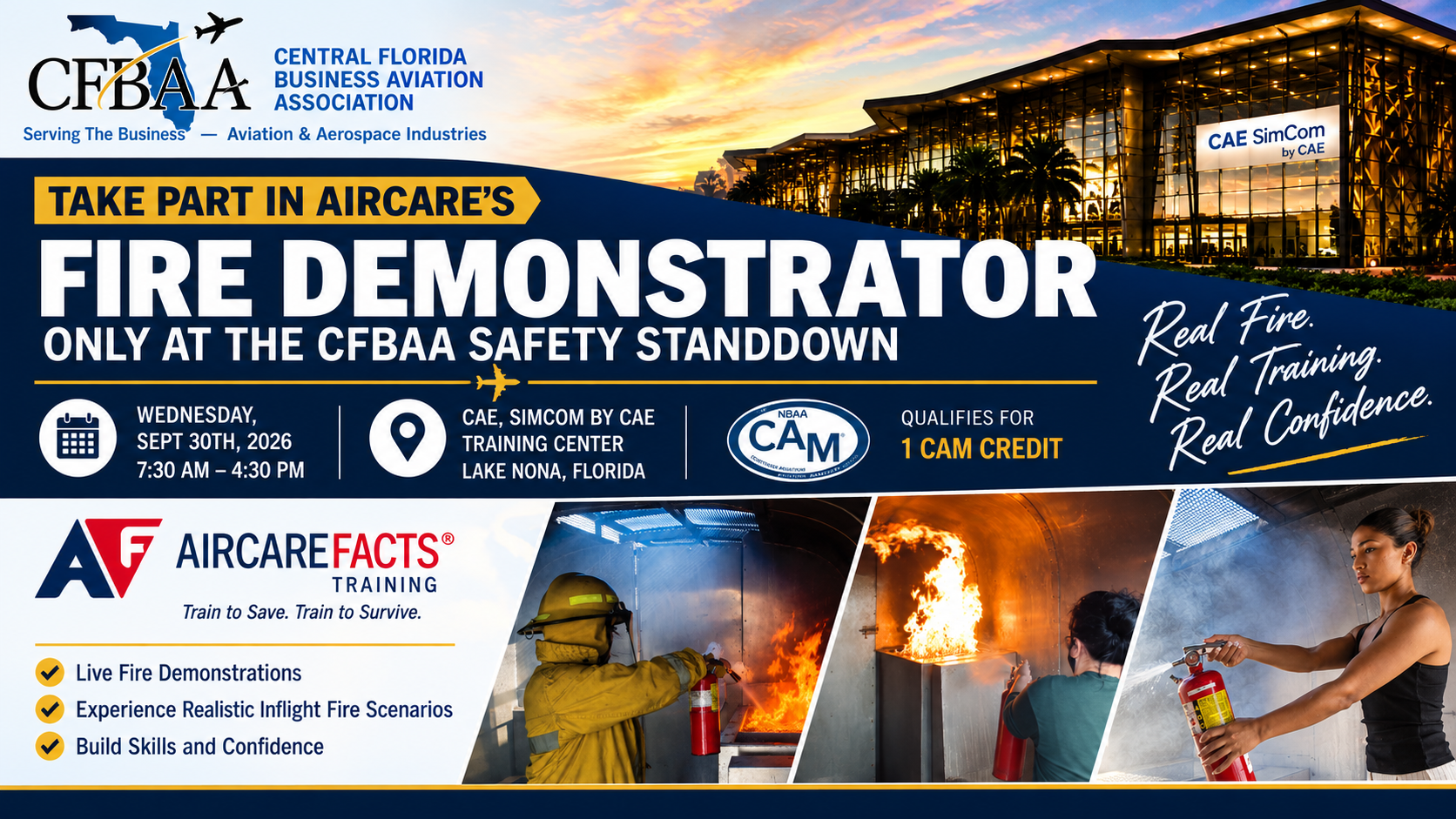
Wednesday, September 30, 2026 | 7:30 AM–4:30 PM
CAE, SimCom by CAE Aviation Training | Lake Nona, Orlando
Join CFBAA for a full day of education, networking, live demonstrations, and real-world safety discussions designed for aviation professionals and flight departments of all sizes.
Featured Sessions
Jason Starke, Ph.D. | BASC
Safety That Fits: Building a Scalable SMS for Your Flight Department
Barry Ellis | Director of Operations, Hop-A-Jet
When the Plan Becomes Real: An ERP Activation
A candid fireside chat examining lessons learned from a real-world ERP activation.
Gina Shealy | Fireside Partners
Ready When It Matters: Building an Emergency Response Plan for the Small Flight Department
Flight Department Leader Panel
Leadership Perspectives on Advancing Safety, People, and Performance
Featuring Wesley Treco, NASCAR, and Scott Harris, L3Harris.
Live Aircare FACTS® Fire Demonstrations
Attendees will have the opportunity to experience the Aircare FACTS® Fire Trainer, featuring realistic inflight fire scenarios in an enclosed business-aircraft-style environment. The trainer incorporates smoke, live fire, protective equipment, and fire extinguisher operation to build practical skills and confidence.
Meet Our Exhibitors
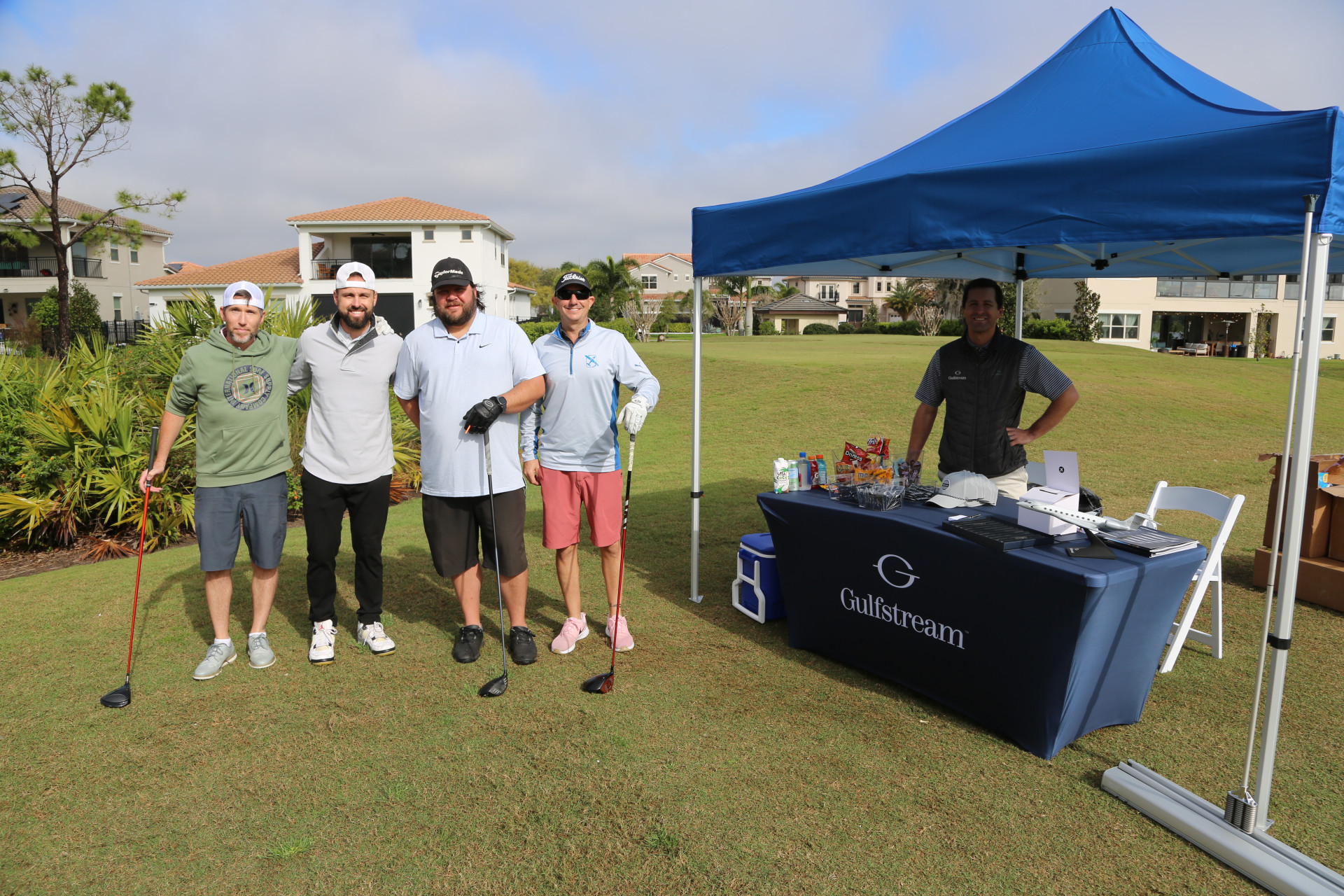
Connect throughout the day with representatives from Aircare International, Business Aviation Safety Consortium (BASC), Gulfstream, Fireside Partners, Air Charter Safety Foundation (ACSF), TrainingPort.net, and CAE / SimCom by CAE.
Attendees can also tour the training facility, network with industry professionals and speakers, enjoy complimentary breakfast, lunch and refreshments, and continue the conversation at our Wind-Down Happy Hour following the event.
CAM Approved — Qualifies for 1 CAM Credit
Space is limited — register today at CFBAA.org.
Registration
Join us for the CFBAA 2nd Annual Safety Standdown and a full day of education, networking, vendor exhibits, and hands-on safety experiences.
Current Undergraduate Students — FREE
CFBAA Members — $20
Non-Members — $40
Registration includes all conference sessions, Vendor Expo access, continental breakfast, lunch, refreshments, and networking opportunities throughout the day.
Space is limited — registration is encouraged.
Sponsorship & Exhibitor Opportunities
Showcase your organization while supporting business aviation safety in Central Florida. Sponsorship opportunities include event recognition, conference signage, Vendor Expo participation, and direct interaction with aviation professionals throughout the day.
Supporting Sponsor — $250 | Logo recognition on conference materials, signage, and event displays.
Exhibitor Sponsor — $500 | Includes Supporting Sponsor benefits plus an exhibit table in the Vendor Expo.
Break Sponsor — $750 | Includes Exhibitor Sponsor benefits plus recognition as the sponsor of a conference networking break.
Premier Sponsor — $1,000 | Includes Break Sponsor benefits plus an opportunity to briefly welcome attendees during the conference opening.
Interested in sponsoring or exhibiting? Contact CFBAA for availability and additional information.
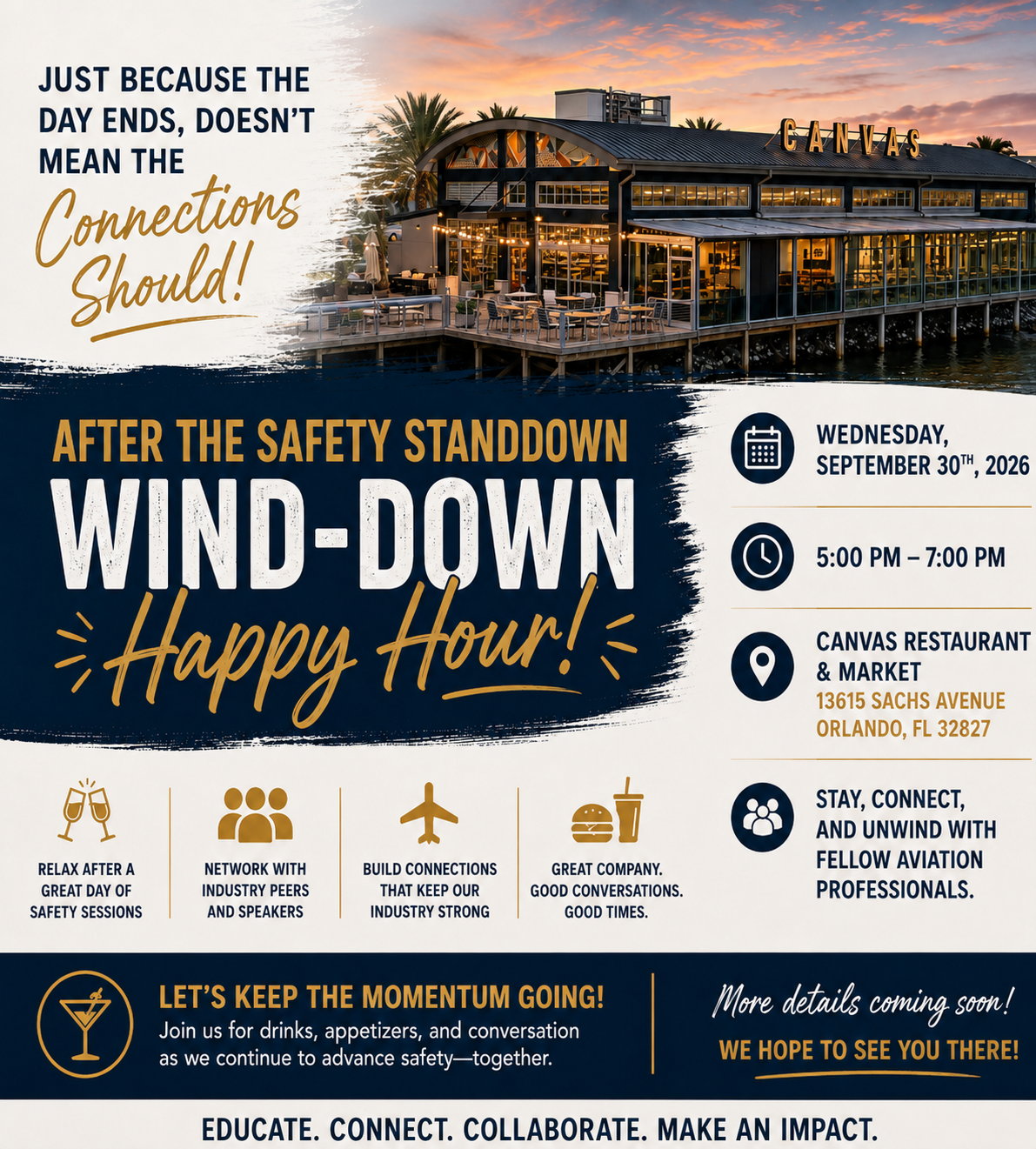
After the Safety Standdown Wind-Down Happy Hour
The learning doesn't have to end when the conference does!
Join the Central Florida Business Aviation Association (CFBAA) immediately following the 2nd Annual Safety Standdown for our Wind-Down Happy Hour.
This informal gathering is the perfect opportunity to continue conversations with fellow aviation professionals, reconnect with industry friends, meet our speakers and sponsors, and build new relationships in a relaxed setting after a full day dedicated to aviation safety.
Enjoy great conversation, refreshments, and the opportunity to strengthen the connections that make our aviation community so successful.
Sponsorship is Open for this event, please email [email protected] if you are interested.
Yo-Pro Committee
YoPro Roundup
This year's Quarterly meeting had some exciting movement for the YoPros. We are still buzzing from the news that Hakar Torres has officially stepped in as our new Executive Director, a huge moment for CFBAA and one that was met with a room full of applause.
Congrats also to David Kollins, who took home Member of the Year, well deserved for everything he pours into CFBAA. We also celebrated this year's scholarship winners, the next generation our YoPro pipeline exists to support.
We've also been busy giving back. YoPros rolled up their sleeves for a Give Back Day at Second Harvest Food Bank of Central Florida in May, sorting donations and packing food boxes to support families across the region. And our YoPro Night at Top Golf drew a great turnout, proof that this community knows how to mix business with a little friendly competition.
Shoutouts
Big congrats to Momar, who completed his ATP CTP at CAE Las Vegas, running September 9 to 15, thanks to the CAE scholarship. This is exactly the kind of milestone our scholarship program exists to make possible.
Please join us in welcoming Trevor Darr to the CFBAA YoPro committee. Trevor is the Founder and President of Apex Provisions, a premium in-flight catering company based in Orlando, serving Part 91 and 135 operators across MCO, ORL, SFB, and the surrounding markets. He's been an asset to the YoPro committee.
The YoPros have been busy! The next 30 to 40 days are packed with events.
Textron Aviation YoPro Tour, September 25 in Tampa
This one is happening fast. We have 20 spots and only about 8 filled, so if you have been on the fence, now is the time to jump in. Lunch is provided. RSVP here.
CFBAA MCO TRACON Tour, September 25, 11:00 AM to 12:00 PM
Ever wondered what it's really like behind the radar scopes of an air traffic controller? Join us for an exclusive, small-group tour of the Orlando TRACON facility. Tours are limited to six members. Open to US citizens. Register now.
5th Annual Levy-Hughes College Fair, Thursday, October 15
CFBAA will have a booth at this Boys & Girls Clubs of Central Florida event, connecting with juniors and seniors from area high schools to showcase career opportunities in business aviation. If you want to help represent CFBAA at the booth, join the YoPro WhatsApp group to sign up.
2nd Annual Safety Standdown, Wednesday, September 30
A full day featuring speakers including Jason Starke, Barry Ellis, and Gina Shealy, plus live demonstrations with the Aircare FACTS fire trainer. It qualifies for 1 CAM credit. We also need a few hands for day-of support; sign up to volunteer here.
3rd Annual CFBAA Golf Classic, Thursday, October 29
We would love to see a YoPro team out on the course, and we also need volunteers for day-of support. Join the YoPro WhatsApp group to sign up and get connected on all the details.
Not in the YoPro WhatsApp group yet?
Reach out to us via email and we'll get you added pronto.
CFBAA News
FlightSafety Supports CFBAA Professional Development for Mechanics!
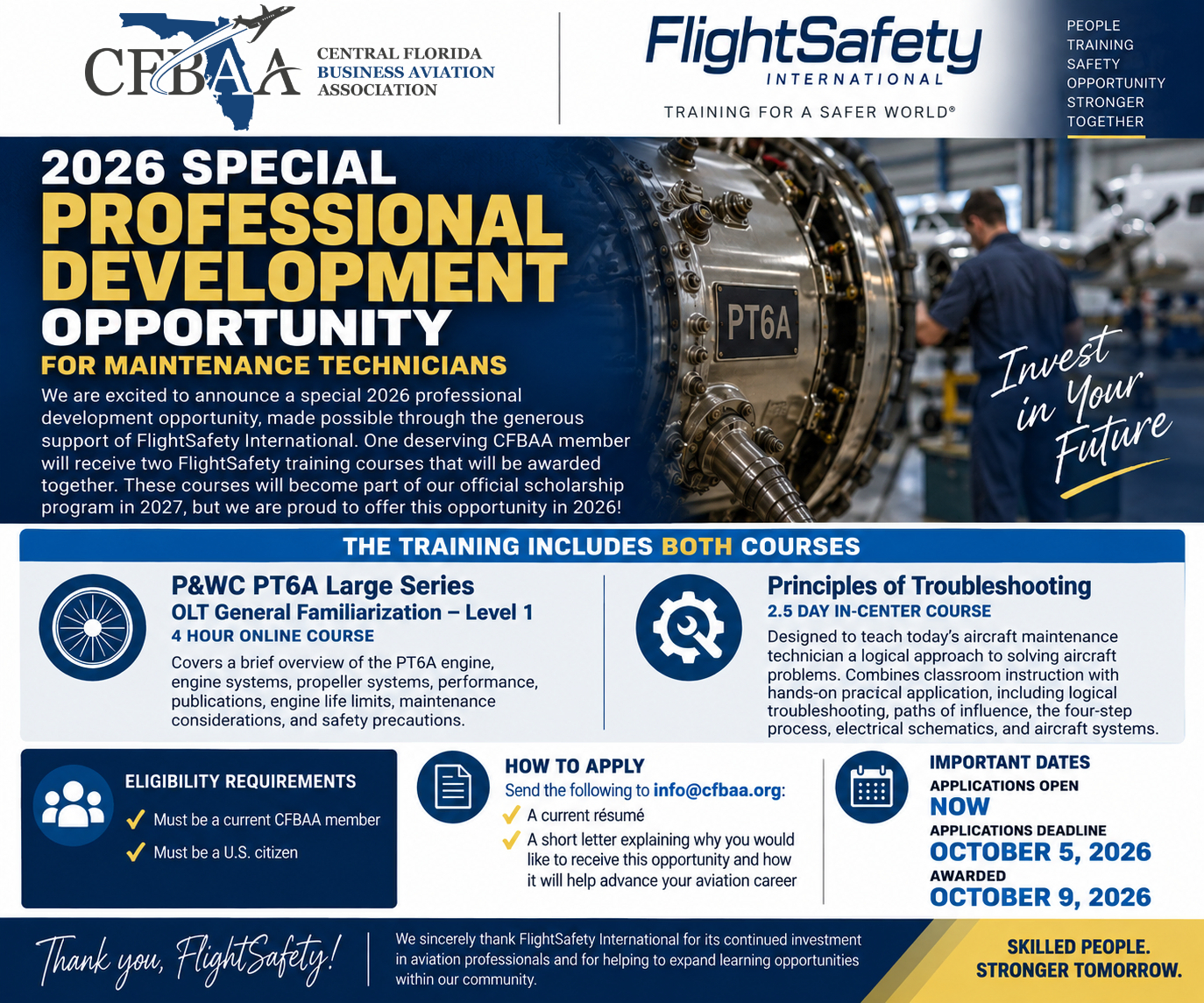
CFBAA is excited to announce a special 2026 professional development opportunity for aircraft maintenance technicians, made possible through the generous support of FlightSafety International.
One CFBAA member will receive both of the following FlightSafety training courses:
- P&WC PT6A Large Series OLT General Familiarization – Level 1 — a four-hour online course covering PT6A engine systems, performance, maintenance considerations, and safety.
- Principles of Troubleshooting — a 2.5-day, in-center course combining classroom instruction and hands-on training to develop a logical approach to aircraft troubleshooting.
Applicants must be a current CFBAA member and U.S. citizen. To apply, send a current résumé and a short letter explaining why you would like this opportunity and how it will help advance your aviation career to [email protected].
Applications close October 5, 2026, and the recipient will be announced October 9, 2026.
A sincere thank you to FlightSafety International for investing in our members and helping CFBAA expand professional development opportunities within our aviation community.
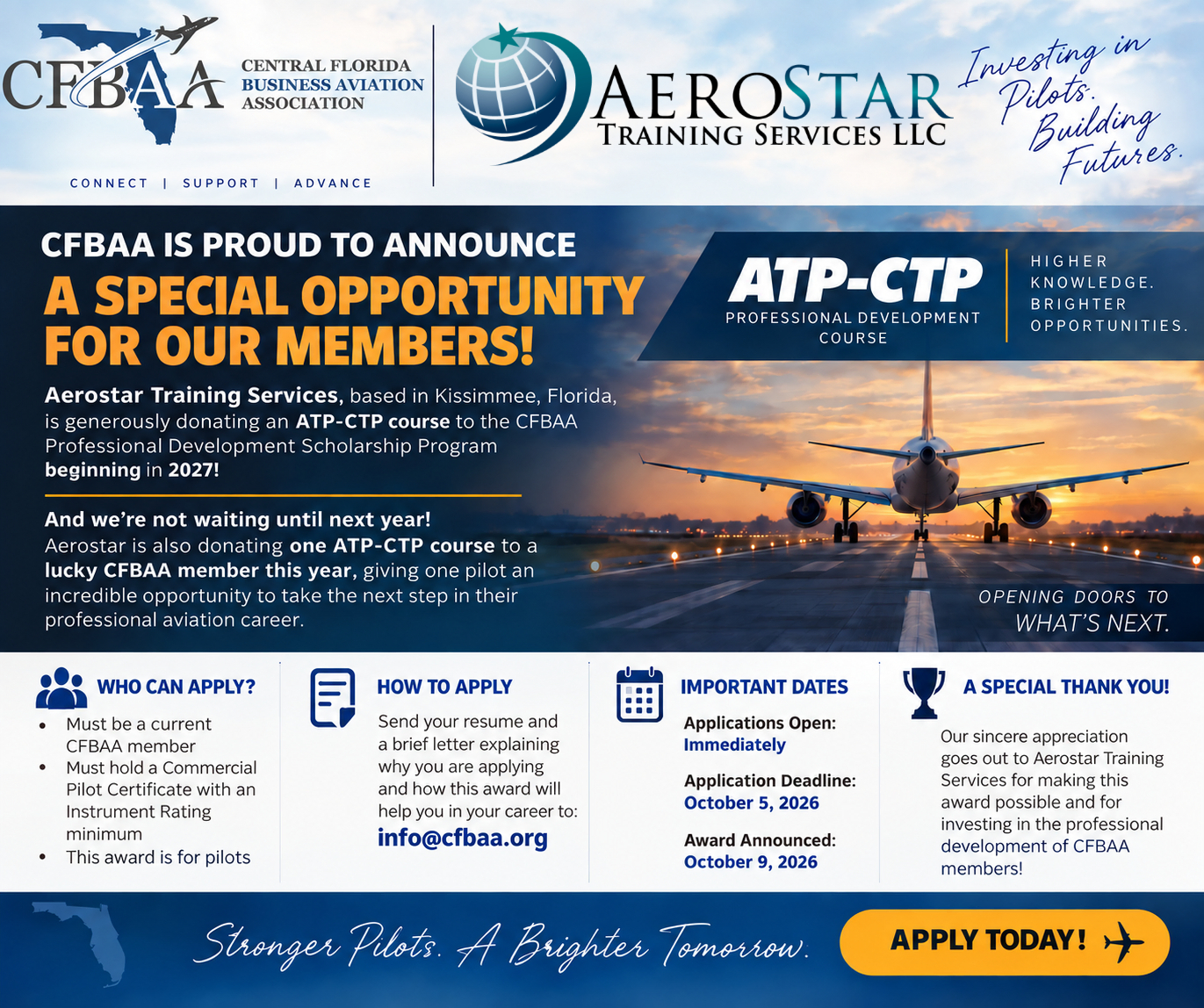
Aerostar Supports CFBAA Professional Development Opportunity for Pilots!
CFBAA is excited to announce that Aerostar Training Services, based in Kissimmee, Florida, is generously donating an ATP-CTP course to the CFBAA Professional Development Scholarship Program beginning in 2027!
But we’re not waiting until next year!
Aerostar is also donating one ATP-CTP course to a CFBAA member in 2026, giving one pilot an incredible opportunity to take the next step in their professional aviation career.
Applicant Requirements:
• Must be a current CFBAA member
• Must hold a Commercial Pilot Certificate with an Instrument Rating at minimum
• This opportunity is specifically for pilots
How to Apply:
Send your resume and a brief letter explaining why you are applying and how this award will help advance your aviation career to [email protected].
📅 Applications Open: Immediately
📅 Application Deadline: October 5, 2026
🏆 Award Announced: October 9, 2026
A very special thank you to Aerostar Training Services for investing in the professional development of CFBAA members and helping us continue to expand the opportunities available to Central Florida’s aviation community.
Interested? Apply today!
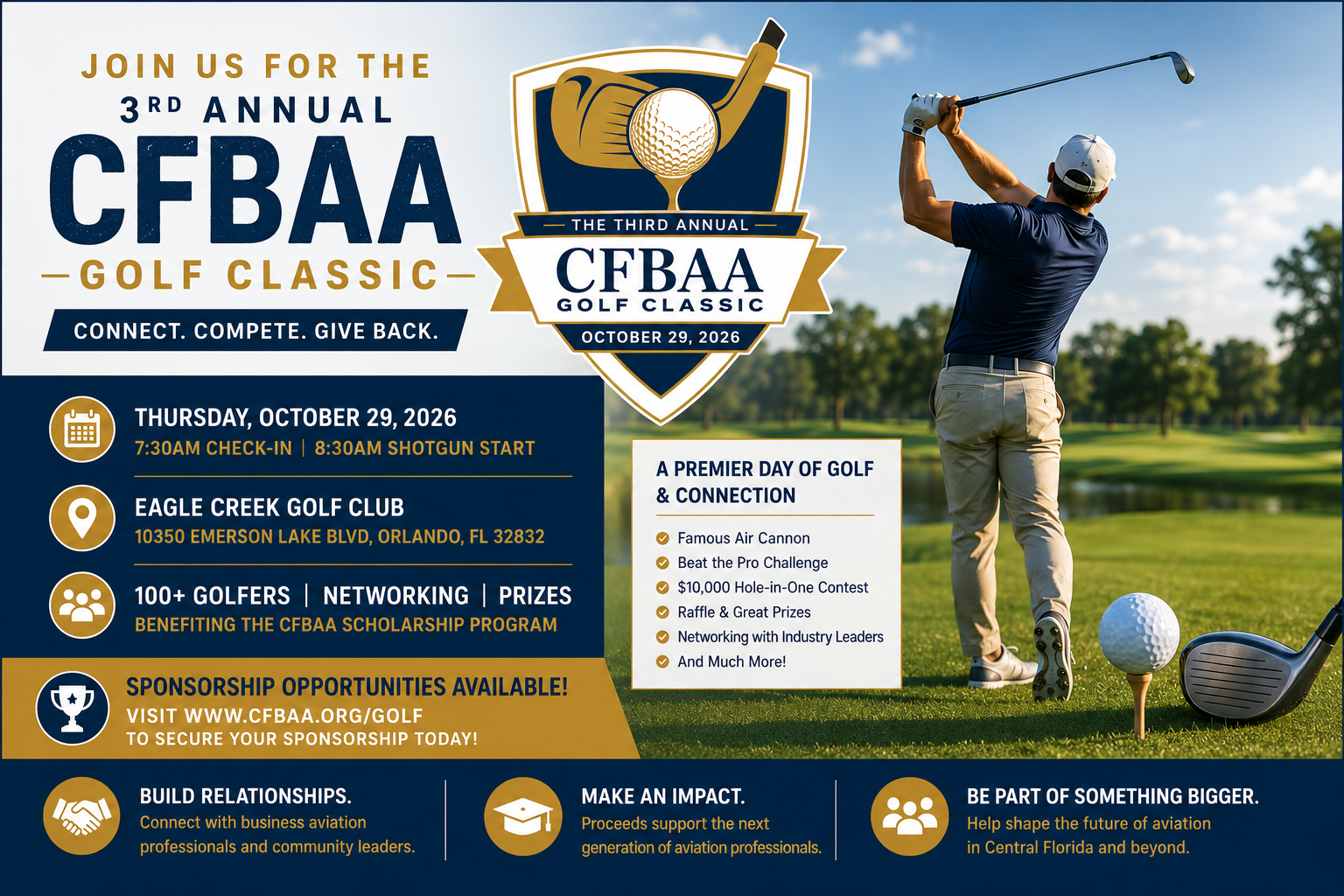
CFBAA Third Annual Golf Classic
Thursday, October 29, 2026 | Eagle Creek Golf Club | Orlando, Florida
Registration Available
Join the Central Florida Business Aviation Association (CFBAA) for our Third Annual Golf Classic, a premier business aviation networking event bringing together industry professionals, sponsors, and supporters for a memorable day of golf, relationship building, and friendly competition.
Hosted at the beautiful Eagle Creek Golf Club in Orlando, this annual event offers an outstanding opportunity to connect with colleagues, strengthen industry relationships, and support the future of business aviation. Whether you're an avid golfer or simply looking for a great networking experience, the CFBAA Golf Classic is an event you won't want to miss.
Proceeds from the tournament benefit CFBAA programs, industry initiatives, and the CFBAA Foundation Scholarship Program, helping develop the next generation of business aviation professionals.
Event Schedule
6:30 AM – Registration Opens
7:00 AM – Driving Range Opens
8:30 AM – Shotgun Start
1:30 PM – Lunch, Awards Presentation & Raffle
Event Highlights
-
Championship golf at Eagle Creek Golf Club
-
Networking with business aviation professionals from across Florida
-
Beat the Pro Challenge
-
Air Cannon Hole
-
Hole-in-One Contest
-
Raffle prizes and on-course contests
-
Lunch, awards presentation, and post-tournament reception
Why Participate?
Expand Your Network
Connect with corporate flight departments, OEMs, FBOs, MROs, airports, suppliers, and aviation professionals in a relaxed and enjoyable setting.
Enjoy a Premier Golf Experience
Spend the day on one of Central Florida's premier championship courses while participating in exciting contests and friendly competition.
Support Aviation Education
Every registration and sponsorship helps fund CFBAA educational programming, workforce development initiatives, and scholarships for aspiring aviation professionals.
CFBAA Golf Classic Sponsorships available!
Visit CFBAA.org and click the Golf tab to view all available sponsorship opportunities. Ready to lock in your spot? Head over to the Meetings tab to reserve, all opportunities are first come, first served, and they go fast!
The CFBAA Golf Classic is one of our most anticipated events of the year, offering a fantastic chance to connect with members of the rapidly growing business aviation and aerospace community in Central Florida.
Whether you're looking for team-building, client engagement, or new networking opportunities, this event delivers—and there’s no better time to enjoy a round of golf than late fall in Orlando.
For questions or more information, email us at [email protected]
Sponsor & Registration